Introduction
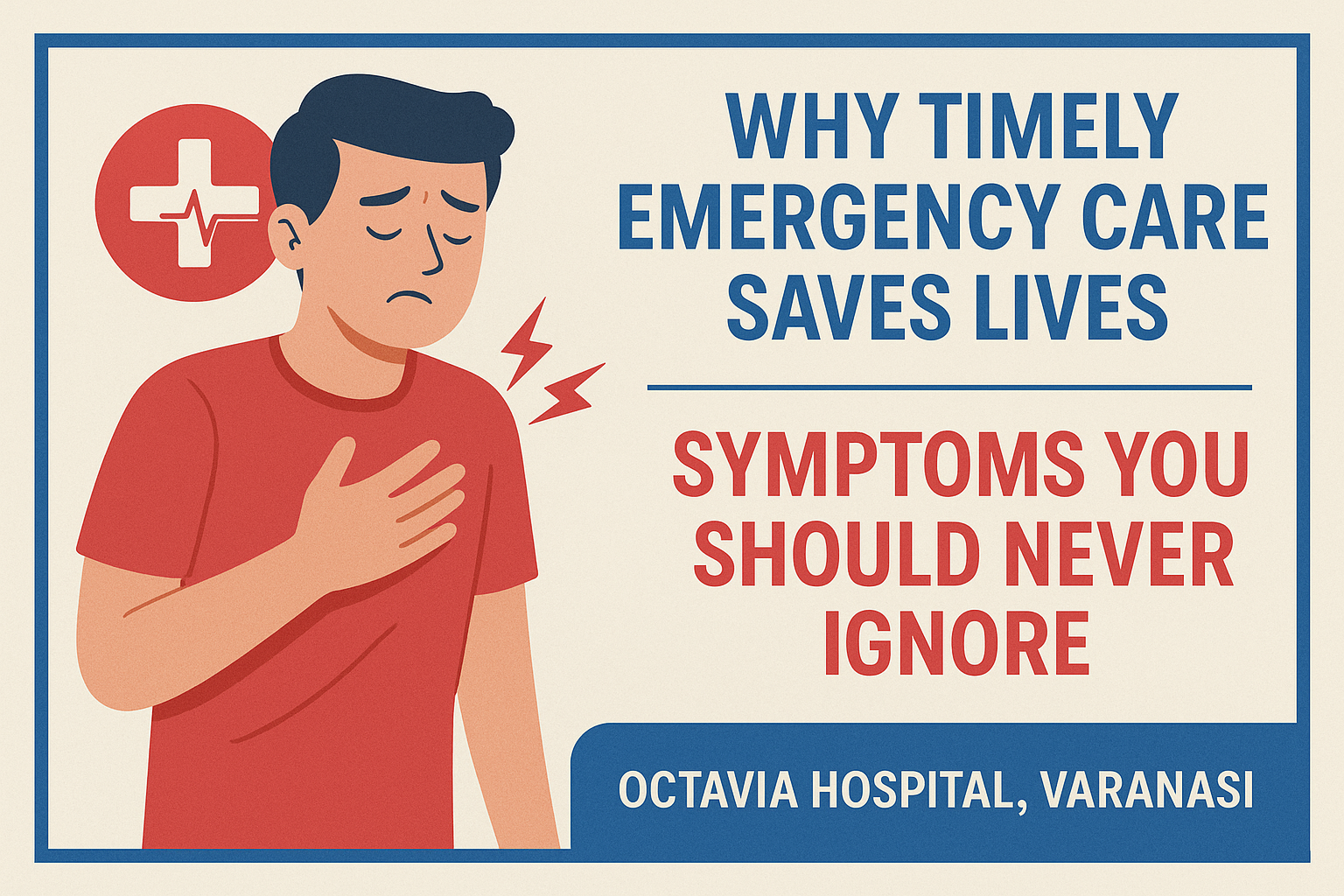
Chest pain is one of the most confusing and dangerous symptoms. Many people mistake a serious heart attack for simple gas or acidity, and this delay can cost lives.
In Varanasi, Octavia Hospital has treated countless patients who arrived late because they assumed chest pain was due to indigestion. This blog explains the exact difference between heart attack pain and gas pain, symptoms you should never ignore, and when to rush to the Octavia Hospital Emergency Department.
Why This Confusion Happens
Gas pain and heart attack pain often occur in the chest area, creating similar sensations such as discomfort, pressure, burning, or tightness.
But the underlying causes are totally different — one is harmless, the other can be life-threatening.
Understanding the difference helps you make the right decision at the right time.
What Is Gas Pain?
Gas pain typically occurs due to:
- Gas build-up in the stomach or intestines
- Acidity or indigestion
- Overeating
- Eating spicy, oily, or fast food
- Swallowing air while eating
- Gastric irritation
Common Features of Gas Pain:
- Burning behind the chest (heartburn)
- Bloating
- Burping or belching
- Relief after passing gas or taking antacid
- Pain mostly related to meals
- Pain reduces when sitting or standing upright
Gas pain is uncomfortable, but generally not dangerous.
What Is Heart Attack Pain?
A heart attack occurs when blood flow to the heart is blocked, causing damage to heart muscles. This is a medical emergency requiring immediate treatment at Octavia Hospital.
Common Features of Heart Attack Pain:
- Intense pressure or heaviness in the chest
- Pain radiating to left arm, back, neck, jaw
- Sweating
- Nausea or vomiting
- Breathing difficulty
- Feeling of fear or doom
- No relief after antacid or rest
Heart attack pain does NOT change with posture, activity, or meals.
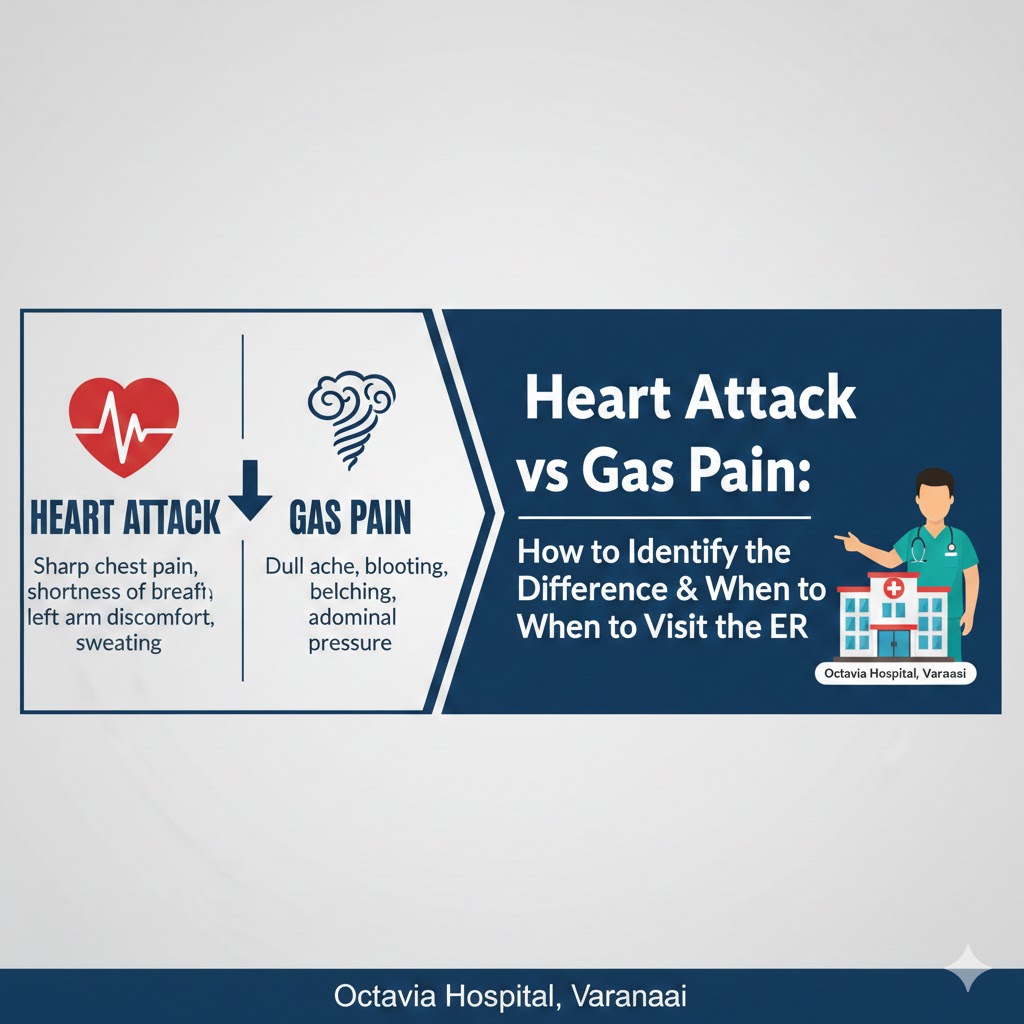
Key Differences: Gas Pain vs Heart Attack Pain
1. Nature of Pain
- Gas Pain: Sharp, burning, discomfort
- Heart Attack: Pressure, squeezing, tightness like “weight on the chest”
2. Location of Pain
- Gas Pain: Stomach area, chest center, upper abdomen
- Heart Attack: Middle or left side of chest, spreading outward
3. Duration of Pain
- Gas Pain: Comes and goes, varies with meals
- Heart Attack: Persistent, longer than 10 minutes
4. Associated Symptoms
Gas Pain:
- Burping
- Bloating
- Acid reflux
Heart Attack:
- Sweating
- Shortness of breath
- Nausea
- Dizziness
- Pain in arm, jaw, or back
5. Response to Antacid
- Gas Pain: Usually improves with antacid or burping
- Heart Attack: No improvement
When To Rush to Octavia Hospital Emergency
Regardless of age or medical history, rush to Octavia Hospital if you experience:
1. Chest pain lasting more than 5–10 minutes
Especially if it increases with time.
2. Chest tightness with sweating
A major red flag for heart attack.
3. Pain spreading to left arm, jaw, or back
This is one of the most typical heart attack signs.
4. Shortness of breath or difficulty breathing
5. Sudden nausea, vomiting, or dizziness
6. No relief from antacids or gas medicines
7. Family history of heart disease
Higher chances of heart attack.
8. Already diagnosed with diabetes, BP, or high cholesterol
Heart problems are more silent in such patients.
Never wait at home assuming “yeh acidity hogi.”
Always choose safety — reach Octavia Hospital immediately.
How Octavia Hospital Handles Chest Pain Emergencies
Octavia Hospital, Varanasi is fully equipped for rapid heart emergency management.
1. 24×7 Cardiac Emergency
Specialist cardiac team available round the clock.
2. Instant ECG & Cardiac Enzymes Test
Quick diagnosis within minutes.
3. Advanced Cath Lab
For angiography, angioplasty, and life-saving interventions.
4. Experienced Interventional Cardiologists
Experts available to manage complex cases.
5. Critical Care Support
ICU, ventilator, and cardiac monitoring systems for high-risk patients.
6. Fast-Track Treatment Protocols
Minimise delay and maximise survival chances.
The sooner a patient reaches Octavia Hospital, the higher the chances of saving heart muscle and preventing complications.
Why You Should Not Self-Diagnose Chest Pain
People often make the mistake of:
- Taking antacids repeatedly
- Waiting for pain to go away
- Searching symptoms online
- Ignoring early signs
Heart attacks can be silent, especially in:
- Diabetic patients
- Elderly
- Women
Never assume — always get tested at Octavia Hospital for clarity and safety.
Simple Rule: If You’re Unsure, Treat It as a Heart Attack
It is much safer to check and get reassurance than to ignore and regret later.
If symptoms appear at night, early morning, or during activity, reach Octavia Hospital Emergency immediately.
Prevention Tips to Reduce Heart Attack Risk
- Monitor BP & sugar regularly
- Avoid junk and oily food
- Reduce stress
- Exercise daily
- Maintain healthy weight
- Quit smoking & alcohol
- Do annual heart checkups at Octavia Hospital
Conclusion
Chest pain should never be taken lightly. Gas pain and heart attack pain may look similar, but the consequences are extremely different.
If chest pain is severe, persistent, or unusual — do not delay.
Visit Octavia Hospital, Varanasi immediately for accurate diagnosis and life-saving cardiac care.
Your heart deserves timely attention.
Your life deserves the best care — Octavia Hospital.