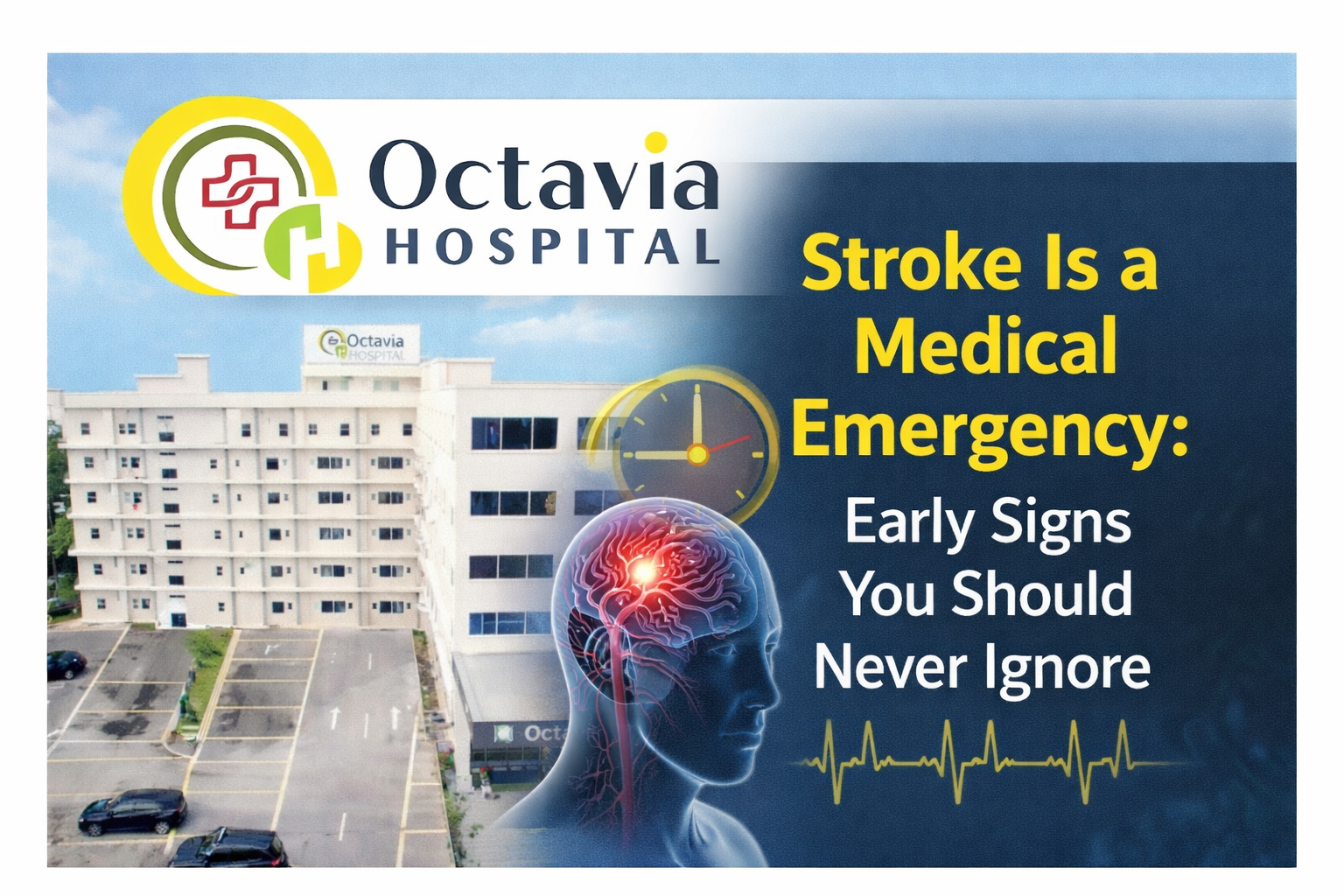
Stroke Is a Medical Emergency: Early Signs You Should Never Ignore
Advanced Stroke Care at Octaviaa Hospital, Varanasi
By Octaviaa Hospital
Introduction
Stroke is one of the leading causes of death and long-term disability worldwide. It occurs suddenly, progresses rapidly, and can cause permanent brain damage if immediate medical attention is not provided.
In many cases, early stroke symptoms are mistaken for general weakness, dizziness, or fatigue, resulting in dangerous delays in treatment. In reality, every minute is critical. Early recognition and timely medical intervention can save brain tissue, reduce long-term disability, and save lives.
At Octaviaa Hospital, Varanasi, the Neurology Department offers advanced, evidence-based stroke care supported by modern diagnostic facilities, round-the-clock emergency services, and a multidisciplinary medical team. This makes the hospital a trusted destination for stroke treatment in Eastern Uttar Pradesh.
What Is a Stroke?
A stroke occurs when the blood supply to a part of the brain is interrupted or significantly reduced, depriving brain cells of oxygen and essential nutrients. Without prompt treatment, brain cells begin to die within minutes.
There are two main types of stroke.
Ischemic Stroke, caused by a blockage in a blood vessel supplying the brain, is the most common type.
Hemorrhagic Stroke occurs when a blood vessel in the brain ruptures, leading to bleeding within or around the brain.
Both types of stroke are medical emergencies and require immediate hospital care.
Early Signs of Stroke You Should Never Ignore
Recognizing the early warning signs of stroke can make a life-saving difference. Seek urgent medical attention if you notice any of the following symptoms:
Sudden weakness or numbness of the face, arm, or leg, often affecting one side of the body.
Facial drooping, where one side of the face appears uneven or the person has difficulty smiling.
Slurred speech, difficulty speaking, understanding words, or sudden confusion.
Sudden vision problems, including blurred vision or loss of vision in one or both eyes.
A sudden, severe headache with no known cause.
Dizziness, difficulty walking, loss of balance, or sudden lack of coordination.
Do not wait for symptoms to improve on their own. Immediate medical care is essential.
Why Stroke Is a Time-Sensitive Emergency
The principle of “time is brain” is fundamental in stroke care. With every passing minute, brain cells suffer irreversible damage, the risk of long-term disability increases, and the chances of full recovery decrease.
Early treatment can help restore blood flow to the brain, limit brain damage, and significantly improve survival and recovery outcomes.
Advanced Stroke Care at Octaviaa Hospital, Varanasi
At Octaviaa Hospital, stroke management follows rapid, structured, and evidence-based protocols to ensure timely and effective treatment.
The hospital provides 24×7 emergency services with immediate neurological evaluation. Advanced imaging facilities such as CT scan and MRI allow quick and accurate differentiation between ischemic and hemorrhagic stroke. Patients receive intensive monitoring, critical care support, and coordinated management involving neurology, critical care, and rehabilitation teams.
This integrated approach ensures faster decision-making and better clinical outcomes.
Stroke Risk Factors You Should Be Aware Of
You may be at a higher risk of stroke if you have high blood pressure, diabetes, heart disease, irregular heartbeat, or high cholesterol. Lifestyle factors such as smoking, tobacco use, obesity, and a sedentary lifestyle also increase risk. A previous stroke or transient ischemic attack (TIA) further raises the likelihood of recurrence.
Early identification and effective management of these risk factors play a crucial role in stroke prevention.
Importance of Post-Stroke Care and Rehabilitation
Stroke care does not end after the emergency phase. Long-term recovery focuses on preventing recurrence, improving movement, speech, and cognitive functions, enhancing quality of life, and providing emotional and practical support to patients and their families.
Octaviaa Hospital emphasizes continuity of care through regular follow-up and coordination with rehabilitation services to support optimal recovery.
Why Patients Trust Octaviaa Hospital for Stroke Treatment in Varanasi
Patients from Varanasi, Shivpur, Bharlai, and surrounding districts trust Octaviaa Hospital for its advanced neurology and emergency care, rapid diagnostic support, ethical and patient-centric treatment approach, multispecialty hospital infrastructure, and safe, well-organized care environment.
These strengths position Octaviaa Hospital as a leading center for stroke care in Varanasi.
When to Seek Emergency Stroke Care Immediately
Seek emergency medical help without delay if you notice sudden weakness or numbness, slurred speech, facial drooping, sudden confusion, or vision loss. Do not attempt home remedies or wait for symptoms to resolve.
Book Emergency Consultation – Neurology Department
If you or your loved one experiences any signs of stroke, seek immediate medical attention.
Address: Bharlai, Shivpur, Varanasi
Emergency Contact: 60020 60024
Website: https://www.octaviahospitals.com
Final Thoughts
Stroke is a life-threatening medical emergency, but early recognition and expert care can significantly reduce its devastating impact.
With advanced diagnostic capabilities, emergency preparedness, and compassionate neurological care, Octaviaa Hospital, Varanasi remains committed to providing timely, reliable, and effective stroke treatment.
Act fast. Recognize the signs. Save a life.